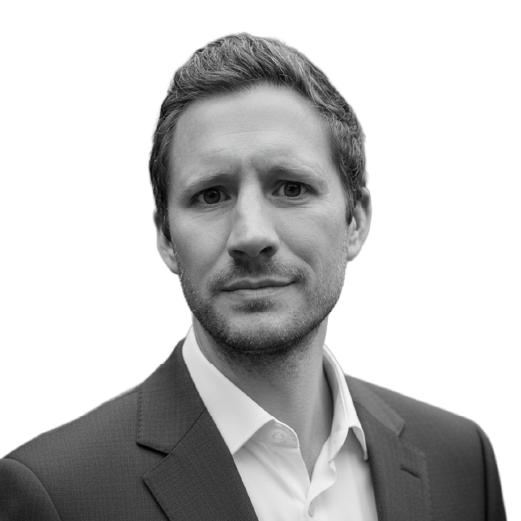
Welcome to another episode of Tech Unhinged, where technology meets [Music] human. Today we have an extraordinary guest with us. He’s a Super Bowl champion, multiport athlete, entrepreneur, and now a leading voice at the intersection of AI, health tech, and space innovation. From the American National Football League to John Hopkins to collaborating with NASA, he’s been redefining human performance in ways not many have done. A huge welcome to the show, Fenny. Let’s kick things off with your journey. What led you from NFL to AI in space technology? Yeah, thanks Robbie. Thanks for for having me. I really uh really appreciate it. Um man, I think I’ve always been a dreamer, you know. Um and as you know, it was my birthday yesterday and you know, as Pisces, we we tend to be dreamers. Um I know I know that’s not a scientific analysis, that’s more of an an artful one. Uh but I I’ve always been a kid. Um, I’ve always loved science fiction. Um, I’m a big I’m a big Treky. Uh, I’m a big Star Wars fan. Um, you know, I love Neil Degrasse Tyson. Um, I’ve always loved astronomy and astrophysics. Um, and I’ve always imagined myself, you know, traveling the universe or, you know, being on Mars with uh the rovers and looking at the different things that uh the different data points and and uh items that can give us insights to the evolution of the universe and the evolution of our own spec species. So, you know, my my dreams aren’t just um rooted in kind of our evolutionary uh biology, but just kind of like where where do we come from? Why are we here? You know, do we live in a multiverse? You know, I these are things I’ve always thought about as a kid. And I know these are not normal thoughts for most young kids, but I’ve always thought about it that way because anything that you know, at the end of the day, I’m a consumer of information and all the information that I’m exposed to moves me in one direction or another. But before I make any conclusions, it always leads me to a thought experiment. And I and the more information I get uh the more um sharp and uh scalpel like I can be about my analysis. So, you know, my journey as an athlete, um, you know, to, uh, San Diego State where I played division one football, to the NFL where I played 11 years and won a Super Bowl with the Ravens, and then John’s Hopkins and NASA, um, and, you know, kind of building these AI LLMbased platforms and using computer vision and, uh, you know, neural networks to provide people insight that is at your fingertips from your home at low cost. It all started with that little kid as a dreamer. It really did. You know, least listening to to Stephven Hawking. Uh listening um Carl Sean. I was a Carl Sean fan as a real young kid. I know these are real these this is real nerdy stuff that I’m getting into. I haven’t said Carl Sean’s name in a really long time, but that was my inspiration as far as, you know, how I got to where I am now. Obviously, there’s a lot of other people that you wouldn’t know about and a lot of athletes that your audience might not know about um that have motivated me and inspired me, but you know um it’s an amalgamation of different people with a lot of different backgrounds, a lot of different diverse backgrounds that uh have poured into me whether indirectly or directly. Um and that’s kind of what’s made me who I am in regard to the way I approach things and think about things. So what was that one defining moment that set you on this particular path as a child? Yeah. So I I would say that um you know being an athlete you are in charge of your own performance right and especially at the lower levels of high school here in the US and I actually went to junior college before I went to San Diego State. Everything I did there was no person to wake me up. There was no person to tell me about supplementation. There was no one to tell me about recovery. There wasn’t anyone to tell me about, you know, workout planning and how to balance being on a track and doing speed work versus being in the weight room and then also the field work that’s required to play football. You know, I I went out of my way to come up with a game plan. And of course, I was influenced and guided by people, but I had to seek them out. They didn’t seek me out asking me, “How can I help you?” It was more like, “Hey, I have dreams. I have goals. Can you help me find this? Can you help me figure this out? Can you help me understand this?” And it’s all just different data points on the larger path to where I got to. Um, and what I would say is, and I bring this up because on a fundamental level, the thing that separates me from probably most athletes and most people in general, I said I’m an information consumer. Well, I’m an information seeker. You know what I mean? Uh, I’m not a what you would call true believer of anything. I I I I do not f follow anybody blindly. I do not assume anything. I seek information and as an information seeker I will then make my decisions based on the data and information and I know that there can be a uh qualitative component to assessing quality value in decision-m I understand there’s a quantitative component and I do understand with the world that we live in there’s a lot of people that feel their way through or they use the word faith um you know I’m not that person unfortunately that’s not who I am um it doesn’t mean that I don’t believe in in things that are hard to touch or hard to explain. Of course I do. I have a very spiritual side to me. But when it comes to performance and when it comes to influencing people and when it comes to building and creating things, you can’t just say, “Oh, you just have to believe me or you just have to trust me.” That’s not good enough. And so for me, understanding that my performance and my opportunities were solely rooted in my ability to take information in, process it, improve it, and iterate on it for myself is really what got me on the path postNFL retirement to where I owned my own private training facility. Um, I became a certified nutritionist and a and a certified personal trainer and I worked on the floor of a gym, a high-end gym at that for five years. And I learned what people liked. I learned what people needed. But I also kept an eye to technology. I also kept uh an eye to things the evolution of activity trackers like a Fitbit and a Garmin and an Apple Watch. I was on the very ground floor of one of the first activity trackers from Fitbit. I was a Fitbit beta tester. Um, and I knew that forever things would change once we started bringing in data and understanding how that personalized data w was was a measure or a tracking of my performance. And I knew around 2012 2013 that I did not want to work in a brick-and-mortar fitness business anymore. I wanted to be on the technological side which then prompted me to sell the business in 2014 enroll at John’s Hopkins in the fall of 2014 and I used Healthre which is ultimately the the platform and app that I ended up building as my capstone project and that capstone project was going to be based on a vertically integrated holistic digital health assessment uh that gave people insights on their mental health their metabolic performance performance, their body composition, healthy weight guidance, healthy body composition guidance, disease risk information. And mind you, this didn’t exist when I came up with this idea. Like some of this stuff didn’t exist at all. Like I I didn’t have a trail to follow. I didn’t have a road map to follow. I had to break things and make mistakes, spend money along the way. But I knew in my mind based on the fact that I’ve been in some type of fitness as a consumer, as an athlete, as a practitioner, and a technologist since I was 15 years old. That’s decades. I’ve been in this space for decades. So, I think that the vision that I had and the path that I’ve chosen is an aggregate of every single data point micro and macro um that has guided me on an intuitive level uh as to what the future’s going to look like. And I could not have predicted chat GPT. I could not have predicted deepseek. I could not have predicted what Nvidia would do moving from gaming to the picks and shovels of AI. But once I saw the roadmap and I saw it coming, it’s not far off from the vision that I had. I didn’t know how we would get there, but I knew that AI would revolutionize our life on a daily basis and it’s doing it now. And I think there’s a lot of space for AI to revolutionize things in fitness and in healthcare. It really hasn’t done it yet. I I feel like it’s very early innings and obviously we have autonomy and robotics and all these other things that are happening, but AI is gonna there’s going to come a point in time everyone’s going to have a robot. Everyone’s going to have a co-pilot, whether it’s on their phone, in their ear, on their watch, telling them like, “Hey, you you need another five minutes of of of your heart rate in this heart rate zone to hit your target.” You know, don’t eat that food. I see that you’re at this restaurant. Order that food. It’s going to be able to literally know exactly where you are and what you’re doing and help you make better decisions. I have no fear of this. People have fear of AI because they don’t understand what they they they have fear of what they don’t know. They have fear of watching Terminator 2 in the Matrix. Like they don’t they like they let their imagination get away from them because they haven’t taken the time to study what AI is going to do for us going forward. Now, is there some scenario where AI becomes sentient and does crazy things? Maybe. May maybe. But AI is going to do whatever we teach it. Um and at the end of the day, we already live with that. We all have children. We all have kids, right? We all have people that probably look up to us. We’re already doing that. we already have real people in the real world that do um surreptitious things and bad things. We already know that. So, that’s something that we’re going to have to reckon with in regard to what AI can or can’t be and the threat that it will be. But my my intuition tells me that whatever negative downside there is to AI and the evolution of AI, the upside is multiples larger in regard to what it can do for life-changing things around cancer and diabetes and you know uh mental health and our obesity epidemic in the US. So Fei since you know it all started from the sort of national football league and your entire you know your experience there and how you became an athlete. So how did that particular experience shape your understanding of human performance if we talk about it comprehensively? Yeah, I mean the the I I’ll go back to, you know, um junior college before I even go to the NFL because it’s all it’s all a continuous, you know, um road map like it’s all connected and um you make do with what you have, right? And the higher levels that you get to going from junior college to a division one program at San Diego State to the NFL, you know, the the amenities improve, right? And the athletes improve and the support improves. The the crazy thing is, and it’s not really crazy because I think this happens in every single business segment and uh athletics is not outside of this, the people with the most support perform the best, right? But you’ve got to get to that place where you have the support and you’ve got to prove to people in some odd way that you’ve done it without the support and that the extra additional investment in you whether mental, emotional, physical, spiritual or capital intensive is going to somehow enhance your performance and enhance the ROI on that investment. Like that’s a very simple mathematical equation. And I think at the NFL level, what you learn is that a lot of kids came from where I came from, poverty. Um, you know, I lived in I lived in Lagos, Nigeria for a number of years, no running water, no electricity. My dad’s from Nigeria. My mom is Irish. My mom is Irish Catholic from Chicago. My dad’s from Nigeria. Um, and so, you know, for a number of years, we had very little. And then when we left Nigeria, we moved into a housing project in Chicago, Illinois. uh we went from one ghetto to another one, you know, and only through time and education and just kind of slowly climbing the socioeconomic ladder um were we was I, you know, my family and I able to get from where we started to kind of where I am now, which has still been climbing, right? And I bring this up because what you realize is is that gifted people can be found anywhere, but to recognize their gift, you have to invest in them, right? And we got lucky numerous times along the way. People invested in us, organizations, schools invested in us. And the athletes that I played with at the NFL level, which are some of the best athletes on the planet, some of the biggest, strongest, fastest, most intuitive athletes that you’ll ever meet, they are in the NFL. This is a fact. Um, and what I realized was is many of them come from the same place that I that I came from. And a lot of them had to figure it out without the support um that they probably needed at an earlier age. But even without the support, they found a way to overcome and persevere. And so what I’ve learned about uh professional athletes at the NFL level, and this can go for, you know, uh any sport, honestly, any sport, any high level professional sport, um athletes are resilient for the most part. Athletes are battle tested for the most part. Um athletes understand what it means to be committed and grind. Um, there’s always going to be these outliers that were just god-given ability. And sometimes those guys never or and those ladies never see their full potential because they were given too much too early, too easily, right? What makes what makes bliss amazing is the trauma that comes before it. Because that trauma is a learning lesson. That adversity is a learning lesson. And what I’ve realized is is that most successful people, most, not all, but most, um, have been through some adversity, some trauma, something that’s really tested their metal, and they’ve overcome it, and they take those learnings and they’ve applied it and moved it forward, and they’re better for it. They’re better athletes for it, they’re better people for it. Very seldom do you have people that are born with a silver spoon in their mouth, um, that are successful. Um, and if they are a lot of times, uh, it’s luck. Unfortunately, it is because or it’s just their the the fact that they came from some some money and opportunity and they’ve just taken advantage of that. And if you look at the environment that we live in and I live in the US, so you know what we’re dealing with here when it comes to leadership, right? It’s very sad. Um, we don’t have good examples in some cases. Um, and unfortunately, people are believers, they’re not seekers, right? Um, and so not to go off on a tangent, but I think you know where I’m going with it. But to kind of circle back to your point about NFL athletes, we are resilient. We are battle tested. We understand that only through trauma and adversity can can there be bliss. That’s the toughest thing that I want you to know or most important thing I want you to know about human performance and professional athletes because if you if you can’t learn from mistakes and adversity, you can’t be a professional athlete. So you know this this brings me to this point that how we going to be talking a lot about you know human performance today and its inter intersection with technology. So which brings me um to this next question that if I what common patterns um do you see in how data enhances human performance which is across health sports and space technology? Yeah, I think that uh data has to be easily accessible, right? It has to be objective. Um and it has to be actionable, you know, like just having data to have data to to make it like there’s artful data and there’s useful data. You know what I mean? Like we can create these bar charts and have these different colors showing all these different things. But that’s nice, but if the art doesn’t motivate me to do something or doesn’t tell me something actionable, it’s useless, right? And so for me when I look at data, of course I want the art component. Art is marketing. Art is stickiness. Art is adoption, right? Art is LTV in regard to data. That’s what it is. It has to move people in some way. But if it’s not if it’s just art and it’s not actionable, then it’s just a pretty thing to look at. and what I see um when it comes to information and and especially when it comes to some of the hardware in fitness, is it something that I need to look at every day? What I love about Fitbit, and I’m not paid by Fitbit, by the way, I just feel like as far as a wearable goes, when you open it up, I have my sleep score every day. I have my REM sleep. I have my resting heart rate. I know my heart range. I know how recovered I am. I know how many calories I burned. Um, it tracks all the things that are meaningful to me in regard to how I approach my day and the actions that I take based on my scores in the morning. Is today going to be a high output activity day or is it going to be more of a rest day or a lower output activity day? How many calories did I eat yesterday? Am I on target? Am I above it? Am I below it? And HealthRel, my platform, my tool, covers some of these things that I think Fitbit even misses. there is a fully comprehensive fully integrated vision for digital health that I feel on the consumer level that I can build and there is obviously an LLM or a chat GPT component a co-pilot in there as well. Um I think all these things will lead to better long-term health outcomes, lower health care costs, less sick people. Um but the data and the information has to be uh art artful but it also has to be actionable. You know this was very insightful and there is a certain level of self-satisfaction when you get to see everything on your wristband. I I am an Apple Watch user myself then you know when you get busy with your work it would it would just tell you to stand up end of the day you can sort of see how many steps you’ve taken. So in this busy world where corporates get most of your time. So it’s just it’s just nice to tell you you know that you’ve got to take care of yourself too. So, my three kids, my brother’s three kids, my daughter’s two kids, but I’m the oldest of the siblings, and my kids are the oldest of the, you know, there’s there’s obviously some mixing of the ages based on when we had our kids, but I had my child first, right? So, my my daughter and my son are basically and my and my brother’s daughter, the three of them all were born in about a two-year window. My son’s 18, my niece is uh is 19, and my daughter is 20. And Oh, yeah. And so, you know, I’ve always taken it upon myself to kind of be the patriarch of my family, right? Because my dad is not really involved in in my life. He lives, you know, he lives in in on another continent, right? And and my siblings always looked up to me. But I also enjoyed being a leader. I also enjoyed being a good older brother. I also enjoy being a good son or a good uncle and a good dad. Like I I pride myself on that. And the reason I mention all this stuff is because at a very young age, I knew how important that the way that I carried myself and the way that I poured into my family, doing laundry, cooking food, taking out the garbage, you know, walking my brother and my sister to the bus stop, being on the bus with them, teaching them how to read maps, all these different things. Teaching my kids the same thing, teaching them independence, teaching them confidence and strength and how to think about the world. All that comes is is possible because I’ve taken care of myself. Because I put myself first. I know it doesn’t sound like I put myself first, but I have. I’ve done all the things I need to do to make sure I am optimized at the highest level. Now, of course, I have a good time. I have fun. I have cheat days. I’ll have a glass of wine. I’ll have a brownie. I’ll have a hamburger. You know, I’ll have the typical US treats that we like to have here in America, right? every every country uh every uh place has their things they like to indulge in. Well, we you know, we have ours, too. And so, I definitely enjoy myself on occasion, but I’m regimented. I’m disciplined. And I have to earn that. I think what bothers me a little bit is that we like to have fun first and then pay for it later. Yeah. I actually like to pay for it first and then have my fun second because I’ve earned it, you know? And that that discipline has been really well as an example for my family. And so, you know, as kind of a a leader, you know, it’s important for me that I take care of myself because I can’t take care of everyone else if I’m not healthy. And the main motivation behind what I do is is there’s a lot of people that are in my position that are helping someone, taking care of someone, raising multiple kids, taking care of a parent. Who knows? Maybe at work they’re taking care of people. What I’m talking about is not hard to understand. There are very there are a lot of people that uh without them many things would fall apart, right? And so the reason I build the things that I build and why I think the insights are so important is that I want people to understand how being optimized mentally, emotionally, physically, spiritually, how that can affect the quality of your work deliverables, but also the quality of life around the people that count on you. So that that’s that’s really the mindset behind everything. Yeah. You know, no, that’s that’s really, you know, impressive. I’m glad that how you’re trying to connect everything from from the ground roots of it and, you know, where we come from and that then how that ultimately shapes us, right? So a bit of a technical perspective to the things now. Uh Fei, how does AI and machine learning transform the way we assess physical potential? One of the things that we did when we first created health reel is that we knew that to really understand somebody’s fitness level, right? To really understand atyposity, which is body fat, right? Like how much how much unnecessary weight are we carrying, what’s the ideal weight that we should be based on our gender and our age, right? Age and gender matter. You can’t ask a 37y old female to have the same body composition as a 222 year old male. That’s completely inongruent. The the ranges for healthy body composition are completely tethered to age and gender. As we age, there’s a natural accumulation of body fat which is relatively healthy. and each kind of and we’ve actually in a linear manner have created exactly what those data points are. So within health reel that data point lives so we can project that on somebody to the day to literally to the day of their age. And to get to get to that information there’s a data point that I call the golden data point which is body fat percentage. We live in a world now where a lot of people are consumed with BMI. BMI is a horrible data point by the way. It’s terrible. It it speaks nothing to atyposity or body fat percentage. All it looks at is your height and your weight. Two people can be the exact same height and weight and one person can be obese and the other can be extremely healthy. But you wouldn’t know that with BMI. Body fat would tell you that, but BMI would not tell you that. And that expression that you just made, a lot of people don’t realize that. That’s why BM That’s why BMI is not an important data point in what we do. Body fat percentage is a data point that we use. and people in the fitness space understand this. So, this is not a secret. This is actually pretty well known and it’s more wellknown now than ever. Um, but obviously it’s hard. I I can’t compare my knowledge to somebody who’s more nent. That’s not a fair comparison. But what I can tell you is I do speak to very nent people in the space and it’s and body fat percentage has become the data point of choice for anyone that’s serious about their fitness. That this is a fact. So to get that data point and to do it in an easy manner, we needed to use computer vision and neural networks. To do that, we needed a video of a person. And there’s requirements for the video, distance, lighting, skin tone, all these different things that go into it. I won’t bore you with the details, but trust me, we went down the rabbit hole because when we first started this, I had no idea how the lighting in the room and the skin tone of a person and the shape of somebody. These things are completely different person to person. They’re like they’re different the way that a fingerprint is different. Like you I don’t care if you have a twin sister, she’s not shaped exactly like you. Even if you’re the same height and weight, like you’re going to be different. And if I have a twin brother, this goes this is the same the same concept. we need to get information from people that that is going to be analyzed through a video assessment. So we we created that we we built that we created some IP around using smart devices and the cameras in smart devices and then using a neural network to assess that video understanding that there are android and gynoid body types. All that refers to is where you carry body fat. looking at where your body fat is because in this video you basically the camera stays still but you just do a 360° turn and then we already have your age, gender, height, weight. We already know your activity level because on the onboarding process there are things that we ask you early on, things that you’ll never have to input again. And there are things you’ll have to input each time that you do assessment. But the real use of AI is not in the recommendations. it it’s it’s not in the guidance. The real use of AI is in the analysis. Um and the future of AI and the thing that we’re working on right now with code district is actually a component called healthg. HealthG is integrated into health reel and it is that uh chat GPT health augmented uh co-pilot or assistant that remembers all your health real data and then it’s it starts to learn about you. It starts to learn about your preferences when it comes to food and exercise and your data and it’ll share it with you and remind you uh and give you guidance if you have questions on how should I exercise today? How many calories should I eat today? How many grams of protein should I eat today? How many grams of fat should I eat today? So, those are the two areas where um AI is is really going to have a massive impact. It’s the analysis and then it’s the the kind of fluid real seeming interaction and guidance. So, it’s really the book ends like the beginning and the end. And there’s really no end, right? But my point is is that there’s the onboarding and the analysis. There’s the guidance and there’s the report and then there’s the interaction. So the whole process is bookend by AI. If you think about like an Oreo cookie, right? You have the the the white of the Oreo in the middle and you have the the kind of the chocolate Oreo cookies on the on the on the front on the top and the bottom. Well, that’s how I look at the use of AI and health reel. I’ve never used that analogy before. I hope it works. So Fe, how have you applied NASA’s health analytics algorithm to realworld health assessments? I need to give you the whole NASA story so you understand like how this all came together. So while I was at Hopkins working on my capstone, uh one of my professors um basically said, “Hey, are you familiar with technology transfer?” I said, “No, I I don’t know what technology transfer is.” Technology transfer, there’s labs all throughout the planet. Uh you name a country, I’m sure there’s a tech transfer opportunity with either a university or some lab. I am blessed to live in the US where we have probably one of the best tech transfer platforms and programs through NASA on the planet. Right? And so there is a NASA lab called Goddard Space Flight Center which is about uh 45 minutes from my house. It’s in between DC and Baltimore where I live in Baltimore. Um, and they have a uh an amalgamation of different IP hardware and software that was com created for the space program but was ultimately either not used for the uh space program or was removed from the space program and that technology was put into a portfolio. And so while I was at Hopkins, there was a single data point under their kind of health and wellness uh I guess you could say box of IP that they had, which wasn’t a ton because if you think about all the things that NASA can do, you know, um health and fitness and wellness might be one of the smaller things. Um although obviously it’s really important for for astronauts, but this data point was called uh corrected BMI. So notice the word corrected BMI because BMI is so ubiquitous uh globally. They wanted to use BMI because they knew that if anyone looked at BMI, they’d have an understanding of like what like overweight is, what healthy is, what too light is, and you know, kind of like what the optimal zone is, right? I think I think the optimal uh BMI I believe is uh 18 and a half to 23.9 I believe something like I think that’s the optimal zone. So what made this data point interesting? One, it was from NASA. So if I was able to acquire it, I get to say I’m working with NASA, which obviously I did. Two, um, it is comprised body fat percentage is one of the data points. So this is so if if BMI was to be useful, it would be useful if body fat percentage had influence on the scoring, which it does. So in 2018 when I acquired it uh I felt that it would be really useful for an audience that really doesn’t understand body fat percentage and the corrected BMI data point would be in the report as just another data point on body composition. So you’d have your current body fat percentage, you’d have corrected BMI, and you’d have your body weight. So you’d have numerous data points that would tell you where you are and then we would have a recommendation that would tell you ideally where you need to be. The truth of the matter is is that you really only need body fat percentage. Like the the corrected BMI is amazing because it shows my ability to partner with an amazing organization like NASA. And there are some people that obviously will would appreciate the BMI metric because that’s what they know. But ultimately, I imagine at some point in the future, BMI will become a relatively antiquated data point. It’ll become relatively useless because it’s not it’s it doesn’t quantify health the way that it should. Um and so, uh that is how I ended up partnering with NASA. But if you fast forward to now, um uh I was the first athlete ever to sign a NASA technology transfer partnership agreement. First ever do it. And so what I did was is before COVID I started introducing NASA to other athletic organizations and we started doing what’s called these athletic boot camps where we’d bring athletes in and we would tell them about tech transfer hoping that they would do what I did. They’d become a partner. Uh so I worked with NASA on that. COVID hit and everything stopped for a while. Um, but the last year I’ve been speaking to the director of tech transfer here in in Green Belt at Goddard and I basically uh and I do a lot of consulting work um and a lot of business and strategic development work and I was able to convince him to allow me to become a NASA consultant. Um and the goal here is is to shine a light and create events but also bring in partnership opportunities through the space act where US institutions, researchers, universities, entrepreneurs, for-profits and nonprofits would go through the process that I went through. They become a tech transfer partner. So my relationship with NASA is twofold. One, I am a tech transfer partner. I have corrected BMI in my uh digital health assessment tool. It’s a feature data point. Simultaneously, I am a consultant for NASA. I am helping them bring awareness to tech transfer. I’m helping them create events, but I’m also helping them onboard uh or other organizations to get more involved in in tech transfer on multiple levels. So, that’s that’s my affiliation with NASA. So, uh Fenny, what can sports science learn from space technology for performance optimization? Yeah. So, it’s it’s interesting because we know that there are definitely problems because our bodies have evolutionary evolutionarily evolved based on gravity and the things that are on planet Earth, right? So, when you get somebody into a zerog environment for an extended amount of time, um, or you try to create artificial gravity, you know, we don’t really know what the long-term ramifications for that could be. When I say longterm, I mean like living off planet on Mars or living on a spaceship for a decade. Like, we don’t know that information yet. So, I can’t really speak to what that means because we just haven’t done enough to figure it out. My guess is is that and these are things that I don’t necessarily know for certain, but conversations that I’ve had at a very high level is what would it be like to give birth in space? You know, what would it be like to give birth on Mars? What would that mean for the evolution of man uh and mankind when you start changing um all the circumstances that we’ve evolved under? My guess is it’s going to be a big deal, right? So, not only are we talking about the evolution and the effects of humans on a genetic level, u but then we’re also talking about the grownup individuals that will have to be in that environment for an extended amount of time. And we know that they have taken they’ve put protocols in place for nutrition. They’ve put protocols in in space for recovery. They put protocols in space for exercise and fitness and maintaining bone density and muscle mass. But the biggest most prudent issue is definitely the metabolic effects of space. The the issues with uh muscle retention in space and loss of muscle mass and bone density for sure. Those are the biggest short-term problems. And um I don’t think we have long-term solutions just yet beyond, you know, the things that uh astronauts are doing right now. uh which is obviously um focused on making sure that they can maintain bone density or bone loss to a minimum and muscle mass loss to a minimum. But we’re in the very nent early days of that discovery process to be honest like that for my area of expertise and the knowledge that I have that’s about as much as I can share about it and that’s about as much as I know about it. I wish I had something more groundbreaking to share, but I know what the challenges are and we’re more in the in the in the challenge discovery uh space uh uh in my opinion than the solutions although there are some short-term solutions right now. You know, you mentioned challenges. So I I would like to deep dive into into challenges a bit more that you have faced in translating advanced research into consumerfriendly applications. Yeah. You know what what’s interesting is is that sometimes less is more. You know, I I would say that when we’re talking about like on planet Earth, right? Like we’re like we’ll move away from the space stuff right now because honestly I can’t really say any more than I’ve already said about that. And if I do try I’ll probably sound silly. But in regard to our fitness, our metabolisms, insulin sensitivity, atyposity and obesity, heart health, brain health, the connection to that with the with the brain and gut uh uh biome, right? Like we know all this stuff. There’s really not and we’re still learning things on a very esoteric level for sure, but I don’t think that we need to know more than we know in regard to applying things that absolutely work. Like, you know, we know we need to eat less trash, we need to eat less processed food, we need to move more, we need to be mentally stimulated, we need to be disconnected from devices at times. And you’re you’re hearing it from a person who loves tech. Um, I think that yoga and I and by the way, you know, I’m I I’m do hot yoga every day. Um, I I kind of was raised in the Bickram model of of yoga and hot yoga. I’m not a fan of the individual, but I am a fan of the art, you know what I mean? Um, make that clear. Uh, because I can separate the art from the artist very easily. Um, but to me the research has already given us guidance on what we need to be doing. The the trick is, which I think is what you’re getting getting to, the crux of it, is how do we make it digestible? And I mean that in a figurative way and a literal way. How do we take what we know and help people digest it and deploy it? That’s going to always be the problem. This goes back to the dilemma of art versus uh action, right? It can be artful, but is it actionable? That’s always the dilemma that we’re going to be facing. And I think that when we get into the words research and advanced research, you just lost 80% of people right there. Like they don’t want to hear about any of that. They just they don’t even want to know. Humans do not want options. They want like two options when it comes to stuff. Is it going to work? And am I going to get the result that I want? I’m talking about fitness right now. I mean, some people might want options and other things, but in general, when you present people with a 10 different solutions, they’re going to be like, I have no idea what to do with that. Why are you giving me 10 solutions? You can’t tell me all 10 of these are equally the same. Give me the best two or three options. Tell me how much they cost. Tell me what I can expect to happen, and then I’ll make a choice. Like, literally, if you do this, this should happen. If you buy this, this should happen. If you buy this, this is what this is going to do. Don’t Don’t ask them open-ended questions. give them the information and the outcome as best you can. Um, and I think that’s the that’s really the the difficulty that I find in a lot of things right now. You know, when people bring things to me, I want to know what it is. I want to know why I should be interested in it. I want to know what it does. I want to know how much time it’s going to take me to learn it. And I want to know what the outcome is going to be. And I want a recommendation, too. I want you to tell me what you think is the best thing. It’s amazing how many people will go through a whole exercise and at the end of it they’ll just lay everything out and be like, “So, what do you think?” You know, like, “What do you mean? What do I think? You you know my issues. You have all my data. Tell me what you think is the best thing for me. Tell me why you think this is the best thing for me.” And if you can’t tell me one thing, give me one or two, maybe three maximum, and why I should choose one of these three. like maybe I just want to get started and and getting started with the base model as something is an easy introduction and you get used to the system, you get used to the UI and the UX and then by perusing and redundancy eventually you’re like well I’m curious about this feature and then if you stay on then you’re well I’m curious about this feature. Get them in the door. Don’t throw a million things at them. just get them in the door first and then slowly but gradually move them up that vertically integrated ladder of things because the truth of the matter is I may go to Whole Foods for grass-fed beef, but I walk around and I go, “Oh man, they have lo they have organic lotion here. Oh, they have fresh fruit here. Oh my god, they have all like I walked in the door for one thing, but I left with 10.” That’s what a good business is. You have somebody walk in for one thing and you end up doing multiple things. as well, but just get them hooked on the one thing first and then let’s work on the other stuff. To me, that’s the challenge in in regard to melding product market fit and advanced research. Product market fit and advanced research are connected in my mind through kind of like the econ the the economics and the psychology of people, right? The money and then the psychological kind of analysis or assessment or the value or the utility they see in said product. But then, you know, I bet that you mentioned um not eating trash food. You you must have difficult time telling your kids not to do that. I actually don’t. You know, they’re they’re at an age now where they’re they’re My son’s an athlete. My daughter’s a model. So, their bodies Yeah. Their bodies are very important to their work and they’ve watched they’ve grown up around me. They’ve grown up around their mom and they see how serious. The best thing you can do for a kid is just lead by example. You don’t even have to say a word. Just let them watch you every day for 18 years. Do what you do. That’s going to teach them everything they need to know. You can say whatever you want. I don’t care what you say. I care what you do. I want to see what you do. There’s a lot of people that say a lot of things, but do they do what they say? No one’s perfect, right? Like, we’re all going to make our mistakes. But I think that at the end of the day, we all revert back to our factory setting. You know, we all revert back to where we’re comfortable. And I think that it takes a lot of work to get to a place where you’re disciplined and that your normal is a highlevel function. Like like there’s the easy normal where we know most people want to live in that easy normal like well I got to go to work. I’m going to get up. I’m going to take a shower. Well, you could have got up an hour earlier and went to the gym. You could have got up an hour earlier and went for a walk. You know what I mean? You could have got up an hour or you could have went to bed uh a little an hour earlier to perform better. Or you could have meal prepped and taken that to work with you. Or you could have made something healthier so that when you come home you already have it in the fridge. Like we tend to move from action to action without any thought for how do I streamline this and make this easier and better so that I have more I can reclaim more time. I can reclaim a healthier lifestyle and I can be healthier. If you’re if you’re waiting for for the for the moment that you need something to take action, you’ve already missed the opportunity to optimize stuff. It’s too late. You’ve got to be thinking about tomorrow. yesterday. You know what I mean? That’s that I know that’s that’s that’s just that’s what I believe. You know, in this entire conversation, I’m getting a lot of advices and, you know, um thoughtful things coming out from you that that can be really helpful and insightful um for the people who who must be listening to this. Can can we talk about you know with AI evolving rapidly how where do you see the biggest breakthroughs in health or maybe we can focus more on the sports analytics side of it? Yeah. So the the biggest breakthroughs that I don’t think that we talk a lot about is probably going to be in cancer and cancer research. There have been medicinal breakthroughs with like GLP1s and GLP2s. That’s obviously not AI related, but I still think that some of the medicines and solutions will be AIdriven, right? The ability to study and project millions of outcomes simultaneously with the use of AI um is going to it’s going to I mean it’s already happening, but I probably can’t even comprehend. And then you add quantum computing to it, which is probably another four, five, 10 years away. um all this stuff is going to be accelerated and I think that the the ability to give people really substantive personalized information in real time that is completely tethered to them is a is an impactful amazing aha moment for people when you see that light bulb go off like, “Oh my god, this is me like this is my information. It’s not like something that fits everyone else. It just fits me. It’s mine, right? I think that’s highly motivational. Um and I think AI is only going to continue to drive that individuality. It’s only going to continue to drive um that personalization and it’s only going to continue to find solutions for problems that we have not found solutions for just yet. Um, so I think that’s those are the areas, the real real big things and the real real small day-to-day things. I think that’s where AI is really going to make its imprint going forward. And and do you think that, you know, AIdriven health monitoring is going to become as mainstream as wearable tech? Absolutely. It’s going to be integrated. It’s all going to be one experience. Like right now my watch actually this watch that I’m wearing I’m not sure if it can do it but blood pressure is not like there’s watches that can do blood pressure right now there are devices that can tell you your blood pressure we already know heart rate variability is in the mix resting heart rate active heart rate um uh metabolic burn rates so um active metabolic rate and resting metabolic rate these are the amount of calories that you burn at rest in an act like these things are already happening, right? So that is the real time kind of health metric data that you can be given at any moment, right? Um, and to me when you take the kind of real time monitoring and you take the kind of weekly or monthly or quarterly guidance that you give somebody and it’s really on them like our reporting with health reel, it doesn’t make sense to do it more than once a week because you know data needs to change for the actions to change and if you’re not changing anything then the data is not going to change. So, if you’re like I if you’re deploying a new fitness strategy or a new diet and a new recovery strategy, hopefully all three at the same time because there’s obviously a synergistic effect when you apply multiple things that are good at the same time. Um it it may make sense to do it, you know, uh once a week, but you know, once a week, once a month, etc., bi-weekly. And then you take the real time things that you’re doing and you overlay all these things things together. The real- time data is the long-term output. Like that’s what it is. It’s all tethered to it to to the other, right? They’re not separate from the other. So to me, the the experience should be seamless. It should all be one thing. But the problem is the bifurcation and the segmentation in fitness and in health and in longevity and mental health. Like it’s everyone wants to just do one thing. Well, to actually improve people, you got to do it all at the same time. You can’t disconnect people from their mental health, from their emotional health, their spiritual and their physical health. It all has to be happening at the same time. And I use the word spiritual very loosely because spiritual health is for the individual. That can be rooted or tethered to religion or it can just be a a feeling or an idea that I’m connected to something larger than myself and my community is my spiritual guide. You know, like there’s a lot of different ways to look at spirituality. So, I just want the audience to know that I’m not defining that for anybody. I’m just telling you like the way that I look at it. But you need all four quadrants to be addressed. Mental, emotional, physical, spiritual. Um, and there are data points that are tied to all four of those. Now, that’s a whole another conversation for another day probably, but you should be tracking all this at the same time in real time in the future and being guided on it in real time in the future. And I think that will happen. But you know Fe you know two sides of the one coin and you’ve talked about um you know art and you know if if we talk about um can we can we really trust AI you know with our data and there there have been a lot of noise with the data breaches and you know the recent happening with the deepseek right so in in your opinion is that something that we can really do but it also even doesn’t matter because people are already doing it I mean I would talk to AI rather than talking to a person sitting next to me and asking them things and not going on hook anymore. So what’s your opinion on that? Yeah, I mean AI is only going to be as good as we we build it, but there are definitely things that are not what I don’t want to happen is that the the people’s fears get out front of the facts, right? We have there there have been uh studies of e efficacy and accuracy on what AI can do and it’s pretty good. Um, and it’s better than humans like right now. Like, should I ask you a question about what I should eat or should I ask OpenAI in Chat GPT? I’m pretty sure Chat GPT is gonna tell me more than you know, right? And if you if you do the math around that now, I am an expert in this space and I’m sure there’s things that chat GPT and Open AI and, you know, all the different, you know, whether it’s DeepSeek or any other model, there’s probably things it’s going to be able to retain and know that I may have forgotten already. you know what I mean? And so to answer your question, yes, we can absolutely trust it and it’s happening right now. It’s already happening like you said. So, um, data breaches are completely different conversation. Um, trust and data breach and all that stuff like people are always going to try to game the system, you know. Um, a lot of people uh try to talk negatively about cryptocurrency, particularly Bitcoin. Uh, and I’m a I’m a fan of Bitcoin and I see the utility of Bitcoin and Bitcoin is not going anywhere. There’s there’s there’s no um I don’t think that once a digital asset or I’m sorry, once once a a financial asset uh crosses the $2 trillion barrier, it has never gone away. Bitcoin’s already crossed that. It’s not going away. So, people want to bury their head in the sand and pretend it’s not a store of value um and it’s not going to um continue to revolutionize um digital assets in our monetary system. They’re just telling themselves a lie. Cuz you don’t have to like something, but you have to understand that it’s going to be part of the system. Like, it’s going to be here. It’s not going anywhere. I think what ends up happening is that we have a fear component. We have a lack of understanding component and then we kind of meld that into completely eliminating something from a toolkit of items that we probably should have in our toolkit. So, am I going to stop using AI? Am I going to stop using technology because I’m worried about someone stealing my data? No, I’m not. I mean the bottom line is is that your driving information, your health insurance information, your car insurance information, uh your banking, uh your consumption of of television and the internet. It’s it’s all tech. It’s all I mean all of any of it can be breached. So, to me, that’s not a reason to not use something because all all you’re going to do is put yourself in a situation where you’re you’re wasting time while everybody else is trying to collateralize it or uh you know, get some time back. So, to me, AI is definitely part of the long-term strategy and plan. AI should absolutely be trusted, but everything has to be verified, right, at the end of the day. Like the more esoteric and complicated the questions that you ask AI, the more likely it’s going to be wrong. And there are some very simple things that AI also gets wrong. Like we know that, right? Like it like for whatever reason, every time I use Gemini, it doesn’t remember my name. I don’t know why it doesn’t remember my name, but it doesn’t remember my name, which is you would think like that should be one of the easiest things to do, right? Um so anyway, but my point is is that technology is accelerating, AI is accelerating, it’s going to be embedded at every level in everything that we do. So I encourage people to not be fearful but to get uh knowledgeable that that’s the best thing that you can do. Um what advice would you give to entrepreneurs and innovators looking to merge AI with human performance industries? Yeah, I think that definitely use AI and and one of the things that um I’m going to give you two two answers to this. The first answer is is that I love my chat feature with uh chat GPT as a sounding board like helping me brainstorm and come up with a roadmap for implementation and also discovery like that it it is the best for that it’s the best for I have an idea this is what I’m trying to build what’s the regulatory situation I should be thinking about how should I go about features what would be important for UI and UX what’s the development time what’s the cost like It’s really good at that. So, if you have an idea, I would absolutely before I even went to another person, I would and and definitely do your research online, but chat GPT is amazing for kind of whiteboarding and soundboarding a concept and really coming up with a plan, a strategy, an elevator pitch. That’s the first thing that I would do. And and the question that you asked me, right, for innovators and entrepreneurs, I don’t know where they are in their entrepreneurial or innovation journey. Maybe they’re further along, but what I’m saying from an advice perspective, I still I think it still stands up. I mean, you can do this with your co-founders and other people on your team, but it might even be better to start with a chat GPT and then come to them with like, hey, this is what I did. Bullet point it out, share it then at that point because then you can kind of show that you’ve really put some time into your into your thought process. The next thing I would say in regard to, you know, kind of using AI is that not only can it help you come up with a road map and help you understand like where the barriers to entry are and kind of doing that like strength, weaknesses, opportunities, threats, that SWAT analysis. Um, it can help you find things locally like you can literally ask it questions about who’s doing this here, who’s my competition in this environment, who built something like this, right? So, there’s just so many different ways to get a lot of information really quickly. I think that, uh, chat GPT and these large language models are really good for that. But um in regard to the specificity of a of a business or if you’re creating a an app or something like that, you know, you don’t always have to use AI the way that I’m using it. You know, maybe AI is not even a requirement for what you’re doing. You know, maybe, you know, regression or some other type of analysis is good enough for what you’re doing. But my assumption is is that whether it comes to like a um customer service component um a revenue and projections component, my guess is AI is going to have some value in regard to helping you with your decision-m. I I’m speaking at a very high level because there’s just too many businesses and too many, you know, innovations and and and ideas that people have for me to give anything, you know, you know, more specific than that. All right. So, the most interesting question, um, what’s the hardest lesson you’ve learned, you know, in your career? Wow. The hardest lessons I’ve learned. Um, that’s a good one. You know, there there are there are five traits that I think every leader and every human should have. Like I I’m very confident about this. Um, and to me, if you can embody these five traits, the chances of you building partnerships and relationships that are not transactional but are collaborative um are a lot more likely. First, you’re authentic. Um, second, you’re positive. Third, um, you know, you show high character. Fourth, you show humility. And fifth, you’re graceful. If you can embody those five things, to me, you’ll eliminate a lot of problems before they even start. And a lot of the problems that we face, because at the end of the day, we still need people to build our dreams. We still need people to help us with something at some point. Unless you just have so much money, none of that matters. But that’s not the way I like to operate. I don’t ever want people to feel like, I’m just going to buy this, I’m gonna buy them, I’m gonna buy that. Like that’s just a terrible way to do business and that doesn’t put out goodwill and that’s not good karma in my opinion. Like I I do think it matters. I think the energy that you put out matters. So when I look at people that are successful, they’re always authentic, they’re positive, they’re high, they have high character, they’re humble, and they’re graceful. And the last thing I’ll say just to add to that, what made them that way is that they’re survivors, right? any trauma they’ve been through, any adversity they’ve been through, they’ve survived it. Um, they’ve assessed every difficult situation they’ve ever been in. Um, they’ve learned from that situation, they’ve deployed what they’ve learned from that information, and then they’ve shared that information with other people as well. So the the that five-step process of authenticity, positivity, character, humility, and grace, it only comes through failure and trauma and adversity. And when it comes to failure, trauma, and adversity, you have to survive it, assess it, learn from it, deploy it, and share it. So to me, those lessons, all the lessons that I’ve had, all the things that I didn’t learn the first time, oh, they came around again and they said, “You didn’t learn the first time. Let me show you again. You didn’t learn.” Okay, you didn’t learn the second time. Let me show you again. And until I learned, things are difficult. And then um not only did I have to learn from those things, but I had to make those character traits part of who I am. And I still mess those things up. You know, I have something on my fridge that says, “Be the thermostat, not the thermometer.” Right? Thermostats set the temperature. Thermometers move with the temperature in the room. Right? You don’t want to be a thermometer. You don’t want to be up and down hot and cold. Like that’s not who you want to be. You want to set the tone and set the temperature as a leader and have people meet and match your energy and say, “Okay, this is how we’re doing. This is how we’re going to get things done.” And that all comes from those five character traits. Like the stats understand what it means to be authentic, positive, uh to have character, to be humble, and to be graceful. And the truth of the matter is is that when you interact with people, you know, you’ve got to be curious. Um you’ve got to be connected and you’ve got to be collaborative. And then only last can you be confrontational. You cannot be you you cannot start with confrontation. And I think a lot of people make mistakes. They start a relationship out with confrontation. Well, I saw that you did this. Why would you do that? There are it’s like you don’t even know me. You haven’t you don’t you haven’t showed me that you’re curious about me. You haven’t showed me that you want to be collaborative. You’re definitely not connected to who I am. But you want to be confrontational. I just think that’s the wrong way to go about things. And so these kind of what I call the four C’s, the five traits of leadership, you know, the survival rubric that I just mentioned, like these are all things that are very easy for me to talk about and I do a lot of keynote speaking and I do a lot of development and leadership work as you can tell probably. Um I try to make it simple for people because if you make things too complicated, it goes back to that advanced research word. Nobody wants to hear about that. They just want to know what they need to know. Yeah. And people always they love uh they learn from their experiences. You know, you can advise them. You can tell them things, but until they are put into that situation and learn something from themselves. They they’re not going to bookmark it. They they’re going to keep repeating that. But then, you know, that’s sort of that’s what makes us human. They’re going to think it’s, oh, that’s not going to happen to me. That oh, that’s not me. And then before you know it, oh nope, that is you. You know, that is you. It hap it just happened to you. You know what I mean? So, are you going to adapt and adjust and and be dynamic or are you going to be static and repeat the same mistakes? And unfortunately, we got a lot of people around here that haven’t learned. I’m absolutely honored to have done this with you and thank you so much for sharing all of your insights, you know, with our listeners today and I am glad that you did it with us. Thank you so much. Okay, no problem. Thank you. [Music]